
Gili Islands safety and currents
Gili Islands safety needs to account for the water separating Trawangan, Meno and Air. Strong currents between the islands are a particular local hazard: do not swim from one island to another. The nearby shoreline can make a destination look reachable, but visual distance is a poor basis for deciding whether to enter the water. Use boats for island crossings and choose water activities around conditions and experience.
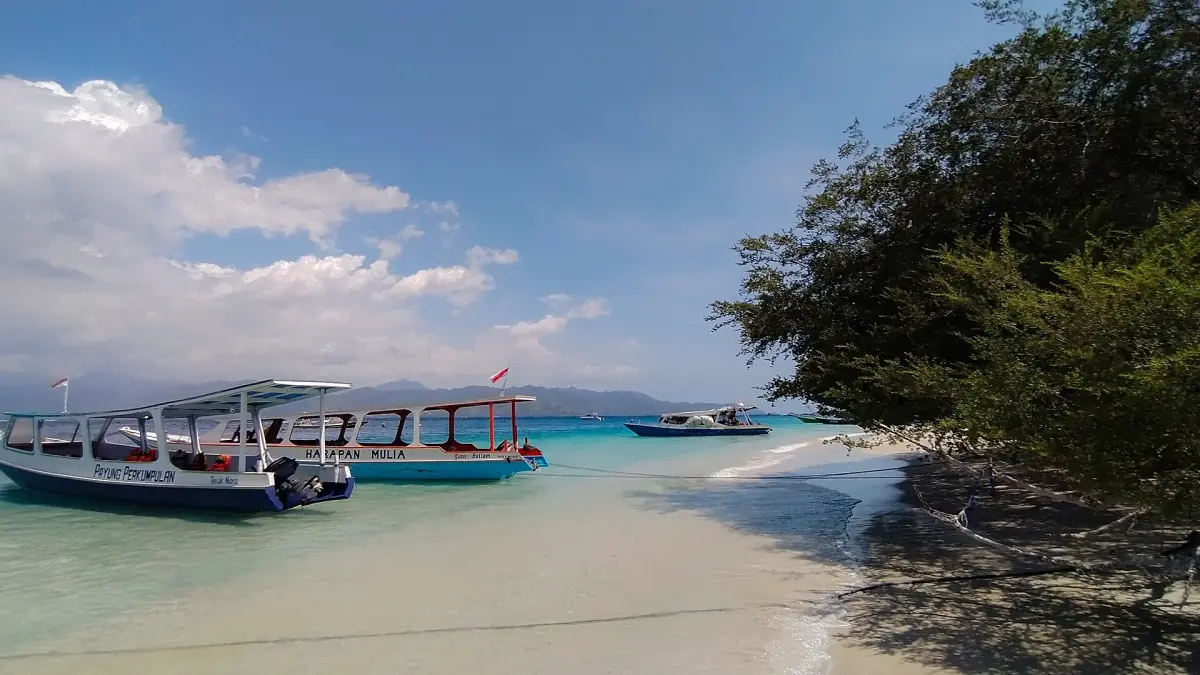
Being close to a beach also does not establish that a swimming route is suitable. Consider the conditions at the actual entry point, your ability and the route back out. A photograph of shallow turquoise water says little about the current on a particular day. The snorkeling guide explains the different boat experiences; the island comparison helps keep their locations clear.
Choosing a guided snorkeling outing
The snorkeling outing featured here includes a guide, glass-bottom boat transport, snorkeling equipment, bottled water and a shared underwater camera. Its meeting arrangement is near Trawangan harbour. This gives you an organised boat outing rather than an independent attempt to reach another island from the beach.
Match your chosen activity to your swimming experience and the conditions on the day. A guide organises an outing, but the presence of a guide does not remove marine hazards. Equipment inclusions also differ between products. Read the specific equipment list, and discuss your experience and support needs before entering the water. Neither a tour booking nor an attractive reef photograph establishes that every participant should follow the same route.
Snorkeling with a guide
This shared boat trip includes a guide and snorkeling equipment.
Hand-picked tours, booked through Viator. Prices are indicative starting prices in US dollars (as of November 2026). Tap a tour for live availability and the current price in your currency.
Guided snorkeling by glass-bottom boat
This outing includes a guide, snorkeling equipment and glass-bottom boat transport; choose an activity suited to your experience and the sea conditions.
Boat cancellations and connection buffers
Weather, safety decisions, technical problems and instructions from authorities or the harbourmaster can lead to cancellations, delays and changed timetables. A booked crossing is part of a wider journey, so leave room before flights or other onward transport. One fast-boat operator recommends at least 24 hours before onward travel in its conditions. That is an operator recommendation, rather than a promise that every disruption will fit inside a day.
The same operator excludes compensation for resulting connection and accommodation costs under its terms. Consider that possibility when choosing how tightly to connect boats, rooms and flights. The arrival guide separates the road and sea sections, while weather planning explains why a drier month still needs a boat buffer. Use departure instructions for your actual service, including local check-in arrangements.
Sea turtles and coral
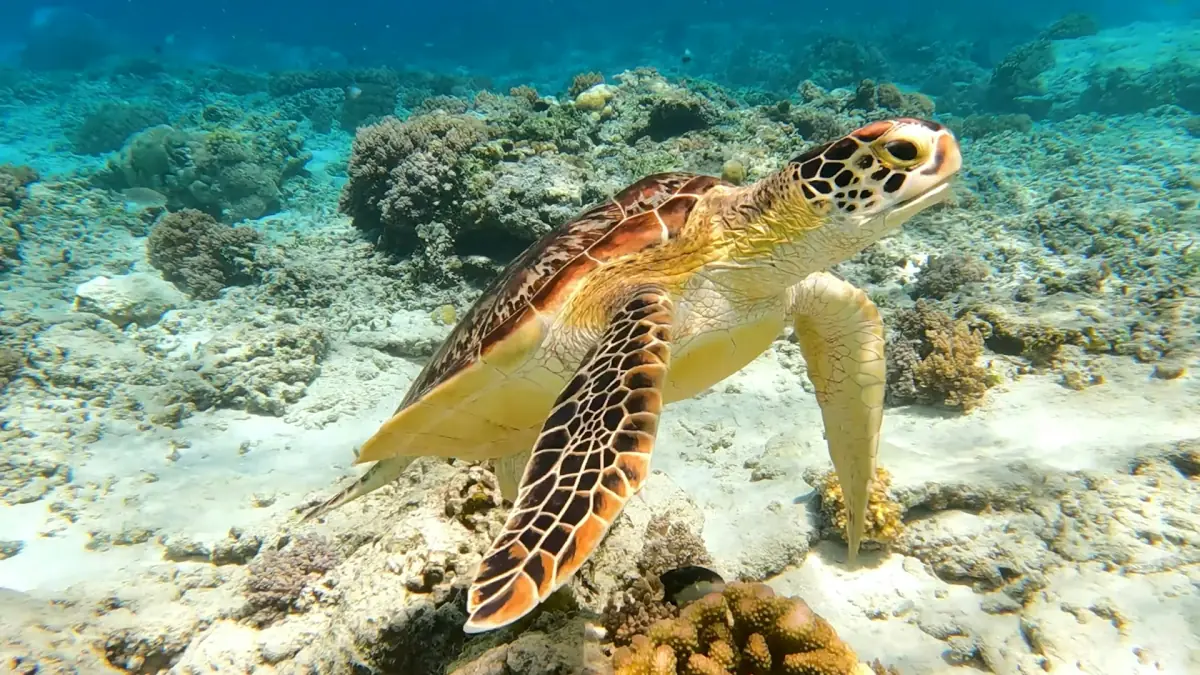
Green and hawksbill turtles are part of local conservation work. A snorkeling trip may encounter marine life, but sightings depend on the animals and conditions. Observe without touching or disturbing turtles and fish. Keep fins and feet clear of coral and avoid standing on the reef, including when stopping to adjust equipment or take photographs.
Nest, the underwater sculpture installation, lies off Gili Meno. Its location near an accessible beach is not a swimming safety assessment. Choose the approach according to conditions rather than following a picture of the sculptures. Treat the surrounding habitat with the same care as any reef stop: the attraction is underwater, within a marine environment rather than a controlled swimming pool.
Protected waters and separate charges
Snorkeling in the national protected area requires a conservation entry ticket, including when you bring your own equipment. Application can be made individually or through an operator. This ticket requirement should not be confused with a general obligation to book a guided tour. Keep the conservation ticket distinct from a municipal island charge, harbour charges and any Bali visitor levy.
The national category B service standard dated 12 March 2025 gives the daily conservation entry tariff as IDR 100,000 per foreign visitor and IDR 10,000 per Indonesian visitor. These are national protected-area tariffs, not a combined total for arrival and activities. Account for the charges relevant to your own journey and the inclusions of the selected tour.
Bicycle paths and cidomo welfare
On land, walking, cycling and horse-drawn cidomo are described transport choices. Paths can include sand, potholes and puddles, so an island route should not be treated as continuously paved or accessible. Consider the actual path and your luggage when selecting accommodation. A shorter walk from the landing point may be more useful than a straight-line distance on a map.
The horse-welfare debate concerns animal care, veterinary support and hoof maintenance. Local work includes education, health checks, rescue and rehabilitation with owners. This is a reason to pay attention to animal condition and transport choices, without treating every carriage as independently certified or every owner as abusive. Plan a manageable route rather than assuming a carriage is required for every arrival.
Safety questions
Can I swim between the islands?
Do not swim between Trawangan, Meno and Air. Strong currents make this a hazardous choice even when the next island looks close.
Does my own snorkeling kit replace the conservation ticket?
The ticket is still required for snorkeling in the protected area. You can apply individually or arrange it through an operator.
Does dry season mean smooth crossings?
Sea conditions can change throughout the year. Leave flexibility in the itinerary and follow the instructions for your particular boat departure.